
Aaron Mighty
BA Product & Furniture Design, Chelsea College of Arts, UAL, 2024. Aaron is a furniture maker from South East London committed to simple design that respects nature and its materials. His Splits and Spills collection of stools is made from local Brown Oak and greenwood (Oak and Hawthorne), foraged from a nearby woodland and finished with Osmo, a clear hard wax/oil finish. The shape of each stool comes directly from the timber it’s made from, so each is different. “A lack of uniformity can give objects a unique character,” observes Aaron, adding that he is indeed “championing imperfection.” Ageing is another quality he values – stating in his “furniture manifesto” that “ageing is gradual, ageing is truthful and ageing is honest.” Here, he has been inspired by his grandfather’s rusty tools. Machines can bring powerful benefits, Aaron continues, but should be tempered with craftsmanship – “for machines can be a threat or a powerful ally.” Last year, Aaron completed a week-long training course in timber, woodland management and furniture-making at the Snowdon School of Furniture.


Alicia Walker
BA Textiles: Innovation and Design, Loughborough University, 2024. Alicia’s The Reward of Labour carefully-crafted fashion collection is inspired by the traditional workwear of North Staffordshire and the area’s rich history of ceramics, silk production and natural dyes. The title is from a qupotation by William Morris who believed that work should be personally fulfilling and fairly rewarded – adding “Is that not enough?” Accordingly, Alicia is celebrating “slow-textiles,” adopting intricate hand-making processes for her “place-based” designs. She has used silk remnants, old workwear and other vintage fabrics wherever possible and has grown plants for dyes herself in her own home in Stoke-on-Trent. She has experimented with multiple techniques and added ceramic buckles made from local clay. “My designs are a story of North Staffordshire and highlight the importance of its historic crafts.”
Alison Nymand
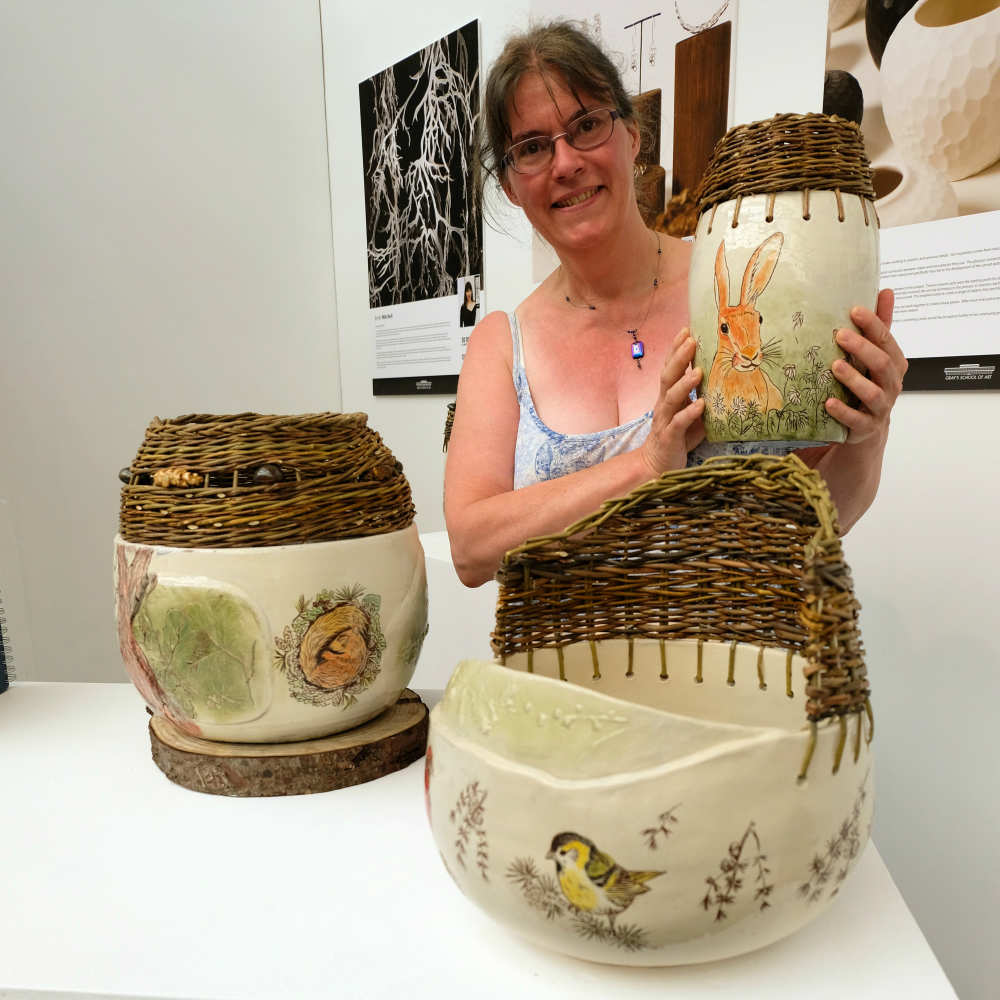
BA Three Dimensional Design, Ceramics and Glass, Gray’s School of Art, Robert Gordon University, 2024. Alison’s pots are a charming combination of drawings, ceramics and basketry. Early work is mainly in red earthenware covered in white slip. Using stains, oxides and underglazes as paint and sgraffito, Alison scratches her carefully-observed drawings of British plants and wildlife through the surface to reveal the red clay beneath. She also attaches clay “sprigs” (made from moulds of plants) to add relief. Finally comes the integrated basketry, woven through piercings in the top of each piece – which meant not only learning a whole new craft but uniquely combining baskets and pots for a rustic appeal. Going forward, Alison is experimenting with other clays, glazes and methods. She and her husband run a small family sheep farm in Aberdeenshire, where they have developed a regenerative approach, using reduced fertiliser and sowing herb-rich layers to build a better carbon structure for the health of sheep and wildlife. A small wind turbine and solar panels will help to power her kiln. “We have an obligation to protect and nurture wildlife and its habitats,” she declares.

Amandine Lucas
BA Furniture and Product Design, Nottingham Trent University, 2024. Amandine has hand crafted her Shorn collection of homewares, with vases, large and small bowls, coasters and even earrings, woven or crocheted from hand-spun 100% British wool. “This quintessential natural fibre is stain- and odour-resistant, insulating, and very durable,” she says. After extensive research and experimentation, she is using plant-based dyes to add vibrant natural colours. The making process is completely circular as woven wool can be shredded and recycled back into yarn up to 20 times before weakening. “My work is a wake-up call for the textile industry, a plea for sustainability and local manufacture and the rejection of harmful and environmentally-damaging dyes. Why can’t we use local materials such as British wool instead of fibres from abroad?”
Amandine is part of THE WOOL HUB, founded in 2021, a group of GREEN GRAD activists who are re-establishing the value of the British fleece. Their leader is Grace Arrowsmith, a GREEN GRAD of 2021, and a sixth-generation farmer.
Aneliya Stoyanova
MA Ceramics, Staffordshire University, 2024. Ceramic artist Anny has mastered the newest and most advanced technology and married it with fantasy and story-telling, to push the boundaries of her craft. Pioneering a new tech-based way of working, she designs her pieces directly in Virtual Reality; or she may create a design first on her computer then refine her ideas in VR . Next, using the digital file she has generated, she directly 3D prints lights, vases and sculptural pieces in a body of marble-like Parian porcelain – robust and exceedingly translucent. This eliminates all those materials normally needed for modelling and moulding. And, as an added benefit, the whole process needs no physical strength. Furthermore, self-glazing energy-saving Parian only needs one firing. Any waste can be collected and reused. Using these techniques, Anny has made a Digital Grotto, with over 100 tiny pieces, including “The Monolith” (a reference to “A Space Odyssey” by Arthur C. Clarke). At its centre is a fanciful figure (herself, 3D scanned and 3D printed in Parian) “dreaming of a better future.” Other influences on Anny’s work include Antoni Gaudi and his Sagrada Familia Basilica in Barcelona, with its fluid organic forms. “But how small we are in comparison to nature!” Anny reflects.

Bea Uprichard
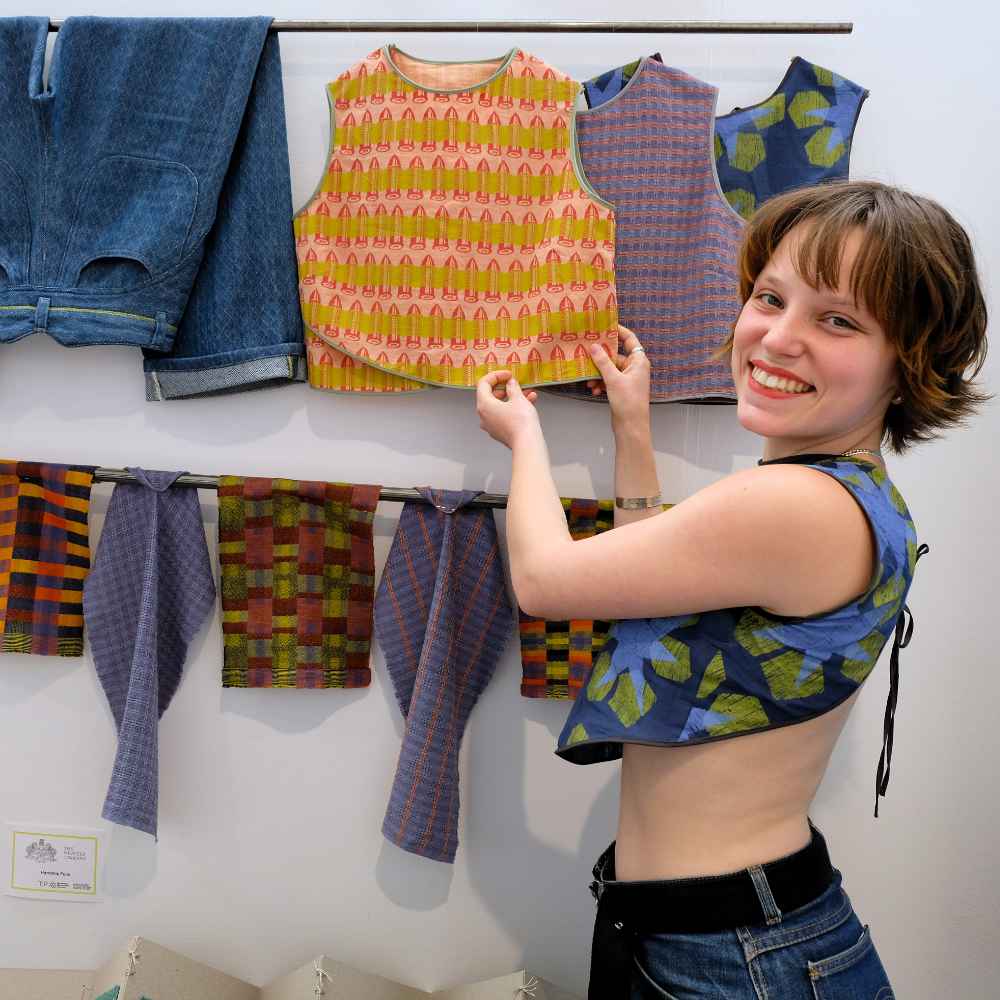
BA Textiles in Practice, Manchester Metropolitan University, 2024 “I’m a designer-maker of woven textiles and my work is my activism,” says this passionate fighter against fast-fashion, who campaigns through story-telling. Thus her collection, Big Country (inspired by cowboy movies) asks us “respectfully to reconnect with our land and the making of our belongings.” Bea explains that isolated and cut off from US industrialisation, the Western frontier, so frequently seen in the cinema, was largely self-sufficient until the 20th century. “Flax was grown, spun, woven into linen and made into clothes, all within one household,” she tells us. Accordingly, Bea’s complex hand-woven textiles, with their beautiful colour combinations and intricate textures, are hand-dyed, and some are hand-sewn into garments. She also hand paints and sews vests for sale, as part of this project. Having made a pair of jeans from scratch, Bea seeks to educate on slow fashion through action. They are designed, indigo hand-dyed, hand-woven and hand-made all by Bea, and it took 56 hours – “I’ve woven my spirit into them.” Bea has been working at Macclesfield Silk Mill, in a team restoring and using Victorian heritage jacquard looms.
Elle MacMillan
BA Textile Design: Retail, Business & Marketing, Birmingham City University, 2024. Elle, an experienced weaver, has experimented extensively with alginate moulding powder, testing its potential for structure, colour and texture. A final woven panel has small same-size “seaweed squares” of varying colours and textures anchored within a web of delicate threads. Now she wants to share and learn more regenerative and sustainable practice, through connecting with other people.” To this end, she has edited and largely written BIO-ACCESS, the first edition of BIO-ZINES, which will be published four times a year. “Whilst researching biomaterials and sustainable methods, I experienced many set-back and made a lot of mistakes. I am sharing my experiences, and also promoting eco-conscious design.” She adds: “There’s a lack of accessible information and resources on sustainability issues, and I’m out to change that – along with encouraging emerging bio-designers across the country.”


Helena Powell
BA Textile Design, Glasgow School of Art, 2024. Helena has transmuted images from Suffolk and Glasgow – “places I call home” – into beautiful stripes and blends of colour into her woven textile “abstract landscapes.” Determined to minimise environmental impact, she has used deadstock yarns and digital printing, and did her dyeing in small batches. A particular strength of Helena’s work is meticulously to record her extensive and in-depth research and experiments. She has, for example, investigated the chemistry, techniques and longevity of dyes, along with their use of water and heavy metals. Her products, which include scarves, tea towels, bookmarks and artworks, come with a full provenance, including the weight of deadstock yarns saved from landfill and the quantities of water and dye used. In the future, she would like to develop ways on a larger scale for the textile industry to minimise water and dye wastage. And she personally will continuously question every step of her weaving process: “I’ll find ways to dye that further cut water and wastage; I’ll expand use of deadstock yarns, and consider solar panels to power my loom,” she declares.
Isobel Browne-Wilkinson
BA 3D Design and Craft, Brighton University, 2024. With over 145 traditional crafts facing extinction, British heritage is at risk. Isobel’s project focuses on one of these: the ancient craft of coracle making. This vessel dating back to the Iron Age and, essentially made from local materials, was once a integral part of British culture. Isobel has restored a reclaimed coracle from Scotland, using milk bottles to bring it back to life and make it seaworthy. She has also made furniture inspired by coracle-making. “I am exploring the overlap of traditional materials and techniques with modern waste,” says Isobel, whose work also raising issues such as climate change, rising sea levels and migration. “My 6ft by 6ft folding coracle structure symbolises the limited and inhumane space often allotted to immigrants arriving the UK,” she adds. Isobel would like to put other traditional crafts in perspective, making modern furniture inspired by them, for example the trug – “and sustainable design is at the root of all my craft.”

Izzy Kelly
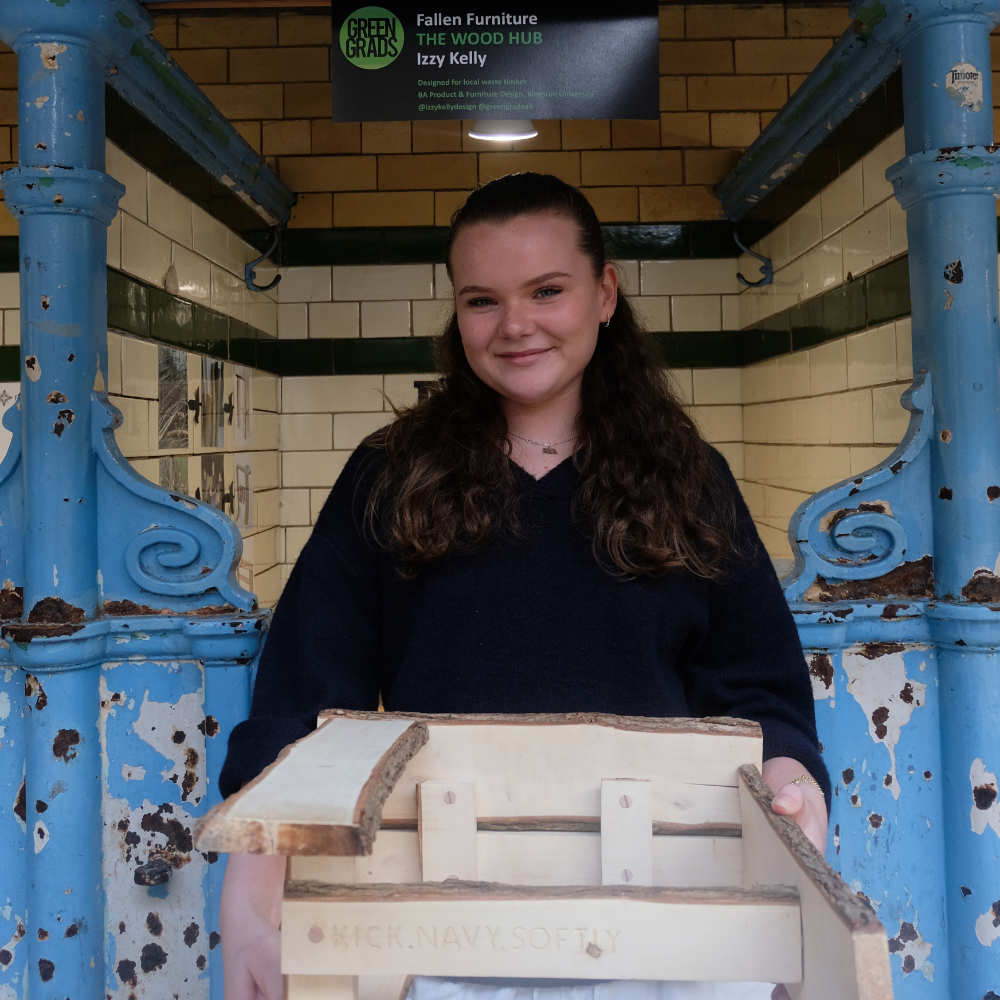
BA Product and Furniture Design, Kingston University, 2024 The UK is the third biggest importer of timber worldwide, yet is one of the world’s most nature-depleted countries, in the bottom 10% globally for biodiversity. Furthermore London councils alone fell over 5,000 trees a year, which are mostly chipped or burnt with consequent release of carbon back into the atmosphere. And flawed schemes for timber certification allow illegally sourced timber to be sold globally. Izzy’s project “Fallen Furniture” calls attention to these shocking statistics. Her collection is made from waste timber fallen within a two-mile radius of Kingston University (where she has been studying). “After contacting local tree surgeons, I was inundated with logs, all completely free, saved from chipping/burning, and transported to the workshop by foot to eliminate carbon emissions.” Her simple design allows the unique qualities of each piece of timber to shape how it looks and functions. There is one simple design for a multi-purpose stool/table/shelf which can be modified to suit the timber collected – allowing the beauty and individuality of each log to shine through. Finally all furniture is engraved according to the What3Words global location system for transparency and provenance.
Jaime Curá
BA Textiles and Surface Design, The Northern School of Art “Sustainability is not simply a buzz-word for me, but the very thread that runs through all my work,” says textile artist/activist Jaime, whose collection Fast>Forward>>Fashion features intricate beautifully-worked coats created from waste as environmental statements and “wearable art.” She says: “I engage intimately with materials that others deem waste, viewing them through a lens of potential and purpose.” Each coat has a very particular theme. There is, for example, a patchwork made from donated denim factory discards, to highlight the excessive water/waste of jeans production. A coat of pieced-together woollen waste from Jaime’s studio bins is a comment on the shocking excesses of fast fashion. And ingeniously-joined pieces of plastic, such as wrappings, carrier bags and even cassette tapes, cut-up, knitted and heat-pressed together, are an attack on pollution. “I want to provoke thought, evoke concern, and inspire action. My pieces challenge our throwaway culture and champion the beauty of reuse and lasting value.”


Jean White
MA Design: Craft, Manchester Metropolitan University, 2021. Future Fossils are the ceramics Jean makes to raise awareness of threatened “red-list” British bird species. “As a keen birdwatcher, I have seen the decline in bird numbers first-hand, since I was a child in the 1960s.” Trained as an illustrator, Jean is an accomplished potter with an expanding professional practice. She uses her skills to carve her drawings into clay, then making plaster moulds and finally slip casting each piece in either porcelain or Parian clay.
Joanne O’Rourke
BA Textile Design, Norwich University of the Arts, 2024. Joanne’s textile collection Harmonious Nature’s Rhythms explores the biodiversity of meadows and marshes through abstract designs infused with dynamic colour. “By combining hand-drawn elements with digital techniques, I aim to capture the energy and fluidity of these ecosystems. Sustainability is at the core of my work, which utilises eco-friendly materials and processes that minimises waste and environmental impact.” Inspiration, she says, comes from the serene landscape of Glendalough, Ireland, where she grew up, and now from the marshes and meadows of Holkham in Norfolk, near where she lives. She has also been influenced by the artists Helen Frankenthaler and Henri Matisse. “I have developed a profound appreciation for the natural world. This connection to nature drives me to create designs that reflect the vibrant interplay of natural elements and promote environmental stewardship.” Going forward, Joanne will focus on eco-friendly dyes, waterless dyeing technologies, biodegradable and non-toxic dyes, and energy-efficient processes. “These advancements can significantly reduce the environmental impact of textile production while opening new creative possibilities.”

Kurt Alexander
BA 3D Designer Maker, Staffordshire University, 2024. The dramatic textures and forms of Kurt’s impressive vessels intentionally evoke the surfaces and vivid colours of coral reefs before the tragic bleaching caused by climate change and warming seas – “I want to raise awareness of the issues marine life faces, and the need for reef conservations and propagation.” His work is underpinned by his own marine fish tanks, and his coastal walks and diving – “I have a passion for the sea and am raising awareness of the incredible life we are losing.” Ongoing, he’s committed to the making of sustainable eco-friendly ceramics, experimenting with wild clay from Lancashire, pit firing without a kiln, ways of using factory waste and alternative glazes that do not use limited mined resources. And he has already has 12 years experience of commercial ceramic production bringing expertise in slip-casting, glazing and more.
Laura Wigham
BA Textiles and Surface Design, The Northern School of Art, 2024. “The Wild North” is Laura’s collection of lino-cuts, paintings, greetings cards and cushions. She was inspired by the North of England and the North of Scotland’s “dramatic, ancient, and remote places,” discovered through personal adventures and captured on film. “The mind wanders in these landscapes. Here is a blank canvas away from the chaos of urban life, where nature feels timeless and anything is imaginable – places where you might even find fairies, witches and even selkies.” (Selkies are the shape shifting seals/women of Scottish folklore.) Laura’s inspirations are “the illustrations of Tolkien, the sustainable ethos of the Arts and Crafts movement, and the textural, free lines of the Impressionists.” Her materials are organic, natural, biodegradable, and/or upcycled/recycled. “I aim to celebrate our environment, connect people to the natural world, awaken their conscience, and keep stories alive!”


Lucia Giron
MA Biodesign, Central Saint Martins, UAL, 2023. “Photosynthesis is the biological alchemy that supports almost all life on earth, and it is the most promising ‘net-negative’ technology we know,” explains London-based multidisciplinary designer, Lucia. “My project Make Like a Leaf uses the building blocks of photosynthesis – simply air, water, and light – as tools for design.” She’s harnessing a process called “photosynthetic biomineralization” in which living cynobacteria capture carbon from surrounding air and convert it into a binding mineral. The result is a living carbon-hungry material that interacts with and responds to its atmosphere. Adds Lucia: “Accordingly, you have to treat this material not like a brick but as a leaf – it’s a completely new approach to construction. Let’s use the logic of ecology to bring about change.”
Luke Gill-Harris
BA 3D design and craft, Brighton University, 2024. This imaginative and resourceful sculptor has made a group of powerful, abstract figures, from handheld forms to towering metal beings. They are welded together from many rescued metal objects – nails, bolts, nuts, wire, hinges, tap handles, corkscrews, horse shoes, chain links, and even a paper shredder. “This intertwines art with sustainability,” says Luke, “and shows the value in reclamation and creative reuse.” He allows the welding process to react unpredictably, embracing rust, weathering and natural degradation. Layering and etching with enamel add intricate – albeit unpredictable – features, with touches of colour. Luke links his work to rapid recent and unsettling advances in technology. He explains: “AI (Artificial Intelligence) will learn and respond to the information that we show them. So it is vital that we teach it to prioritise the environment, by, for example reusing waste. My sculptures utilise scrap metal to encourage the creative reuse of materials and to show Artificial Intelligence the pressing task of helping our planet. “

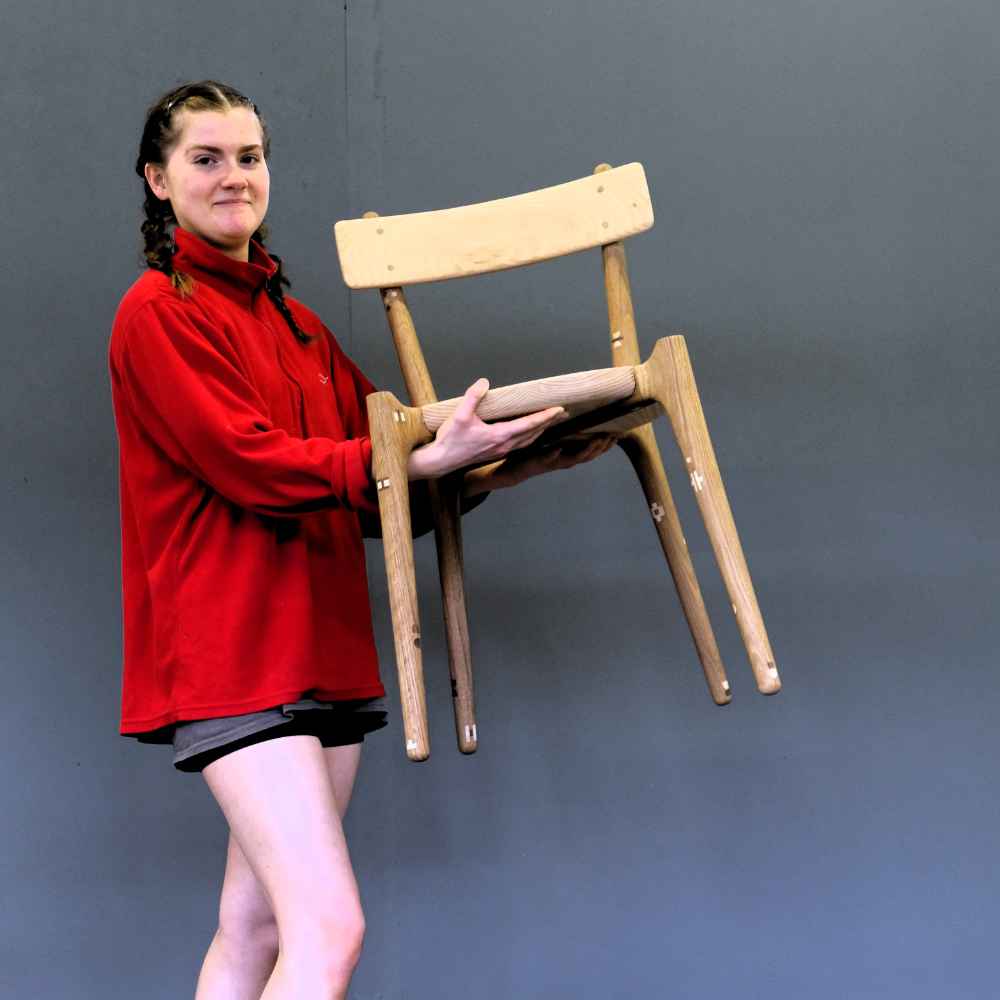
Millie Whitrow
BA 3D Designer Maker, Staffordshire University, 2024. Millie’s robust Family Tree chair, made from wood, an age-old renewable resource, is finely-crafted for a long life. It is inspired by the durability of a family heirloom, with a charming story. “Every Christmas, we gather chairs from around the house to fit family members, partners and friends at the dinner table. Out comes my great-great-grandfather’s chair, which has been my inspiration. Its legs are subtly worn through years of use. And I’ve reflected this by extending my chair’s legs and carving out sections.” Millie has also turned wood scraps into decorative features, inlaying them in a purposely irregular fashion around the legs. “A set of chairs would have similar but not identical details.” She adds: “I strongly believe that we should create furniture and products to last through high quality and craftsmanship.”
Omid Jahankhani
BA Product and Furniture Design, Chelsea College of Arts, UAL, 2024. Omid’s Off-cut Series is carefully crafted from waste materials, such as pieces of white onyx and sapele wood, rescued from factories and workshops in North West London, where he has his workshop. “People throw things away without considering their potential – I am taking a more conscious approach. The design process is organic and spontaneous, evolving from the salvaged waste, which gains a new purpose.” Omid plans to expand his material base, adding, for example, fabric and metal, and hopefully collaborating with larger companies. Omid has also made an experimental stool collection from locally-sourced fig wood, pine and oak timber sleepers. He has explored various burnt wood finishes as traditional methods of timber preservation.

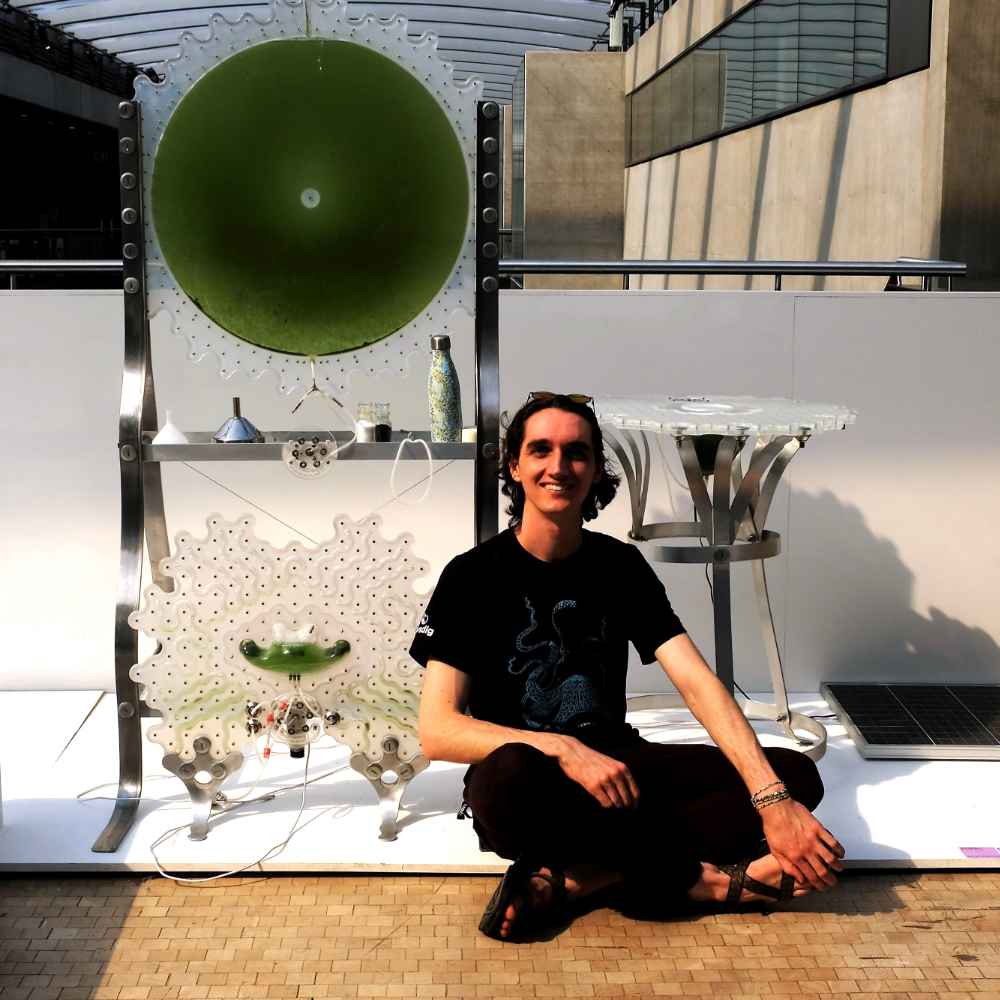
Peter Nasielski
MA Design, Central Saint Martins, UAL, 2023. Peter makes living furniture which has a photo bioreactor harnessing photosynthesis and algae to purify air and grow food. “It’s essentially regenerative,” explains the designer, “exploiting the incredible properties of Spirulina, an edible species of cyanobacteria that capture atmospheric carbon more efficiently than any terrestrial plant.” He calls his piece, somewhat romantically, Proterozoic Portal – “because it is something like a round portal looking back to the Proterozoic Eon, the period of Earth’s history when photosynthetic cyanobacteria ruled the world, oxygenated our atmosphere, and enabled the development of multicellular life.” He also talks about the Symbiocene – “the next chapter in Earth’s history when human society becomes fully integrated with physical and living systems at all scales.”
Scarlett Farrer
BA Textile Design with Business Studies, Specialising in Weave, University of Brighton, 2024. Scarlett’s Field to Fabric collection is hand-woven sustainably and ethically from hand spun 100% natural fibres Scarlett explains: “I’ve worked closely with local farmers, collecting their unwanted sheep fleeces and hand spinning them myself into yarn. Inspiration has come directly from the British countryside and landscapes.” Her process is completely circular so fabrics can be composted at end of life, providing nutrients for the earth. She adds: “I’ve had a passion for working with animals since I was a child. Using sheep and alpaca fleeces keeps me in touch with farming. I know exactly where my materials come from and who is making them. And I’ve changed my lifestyle to be more sustainable.” Ongoing, she is building her practice around these interests/principles, and has an ambitious five-year plan which includes cross-country trips to learn about native sheep breeds; sheering and wool handling courses; and collaborating with other emerging makers.
Scarlett is a member of THE WOOL HUB, founded in 2021, a group of GREEN GRAD activists who are re-establishing the value of the British fleece. Their leader is Grace Arrowsmith, a GREEN GRAD of 2021, and a sixth-generation farmer.


Simon Roberts
MA Product & Furniture Design, Kingston School of Art, 2023. Simon is a practising Product Design teacher who completed his MA in his spare time. He devised StickBrick as a classroom exercise for design and technology students to raise awareness of waste and sustainability. He collected around 20,000 chopsticks from his local Hammersmith branch of Wagamama, which were cleaned, sterilised and engineered into stable uniform blocks – strong enough for even a small table, which took 10,000 chopsticks. Says Simon: “Such projects can link schools with communities, and foster craft-based learning.” And – beyond the classroom – there are wider and important implications for the creative use of waste. Simon also offers a repair/restoration service for cricket bats.
Sofia Barbé
MA Textiles, Royal College of Art, 2024. Natural materials such as coconut coir, wool, milk-based paint, natural glues, and fibres like flax and raffia are at the core of Sofia’s practice, along with textiles “grown” on mycelium. From this huge palette of natural materials, she has created “The Tree Club” collection of wall-hangings and idiosyncratic soft sculptures/creatures, each seemingly animated, with its own distinctive personality. They are inspired by Richard Louv’s book “The Last Child in the Woods” (2005), which highlights the importance of connecting with nature during childhood. Sofia’s work reflects her own nature-rich upbringing in Uruguay and her childhood memories of sharing happy times with family and friends. “I love natural materials and making them playful and colourful. I want to find fibres that can spark curiosity and provoke dialogue. I’m exploring unconventional techniques and at the same time preserving traditional crafts – as in my needle-felting experiments.”
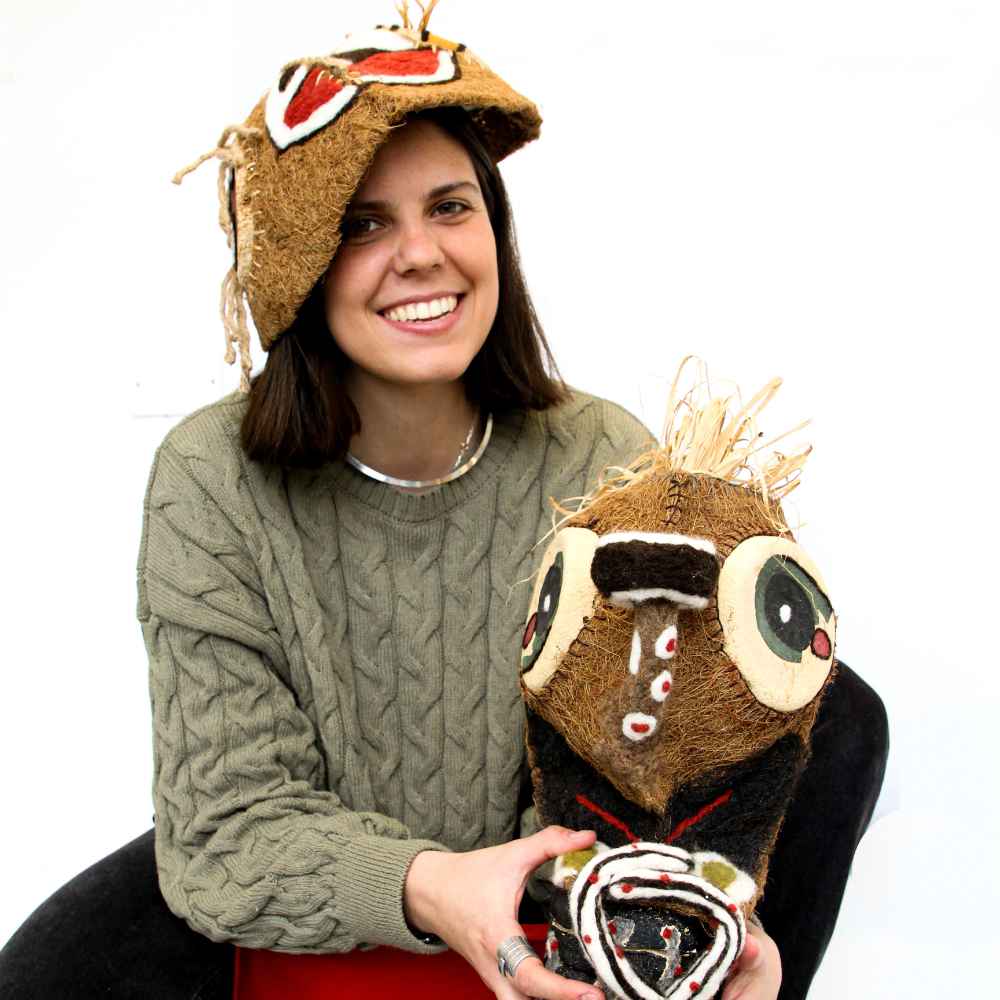

Sophie Ferrier
BA Contemporary Design Craft, 2024, Hereford College of Arts, 2024. To make her shapely, tactile and poetic Urns of Restoration, Sophie created a new biomaterial from the Himalayan Balsam plant (Impatiens glandulifera), a non-native invasive species clogging up the rivers near where she lives and studied in Herefordshire. She saw piles of it on banks, diligently removed by local communities, but left where it could breakdown and potentially spread again. Making her material is laborious. Stalk, leaves, flowers, seed pods and seeds are separated, cut into small pieces, left to dry naturally, then finely ground. After soaking and sieving, Sophie adds brown algae extract and tree sap, to make a malleable material that can be moulded by hand or pressed into moulds. The urns are baked to remove excess moisture and sanding creates a smooth surface which is enhanced with oils and waxes for longevity. “My material is flexible as clay when wet but as durable as wood when dry.” Urns may be symbols of death, says Sophie. “But the more profound ecological truth is that nature does not die but perpetually recycles nutrients.” Her urns, she adds, are an advocate for circular design and a reflection on our consumer culture, with its excessive waste. “As artisans and stewards of the Earth, we must embrace material recycling and reuse.”
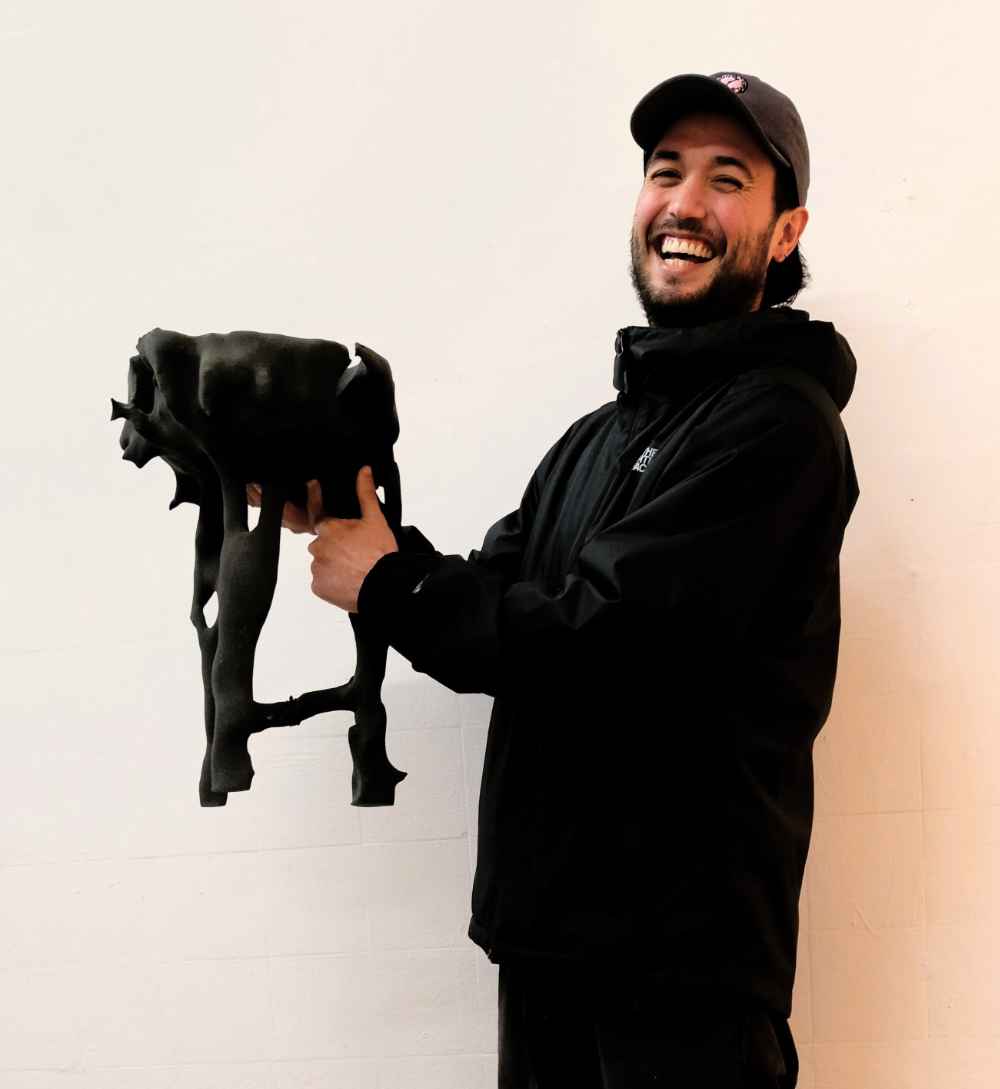
Will Eliot
MSc/MA Innovation Design Engineering, Imperial College London/Royal College of Art, 2023. “Mealworms ate my table,” says Will. And it’s true, though a bit involved. Mealworms host a unique bacteria that is able to digest polystyrene. Accordingly, Will injected sugar trails through a polystyrene block to map out the table’s shape. Attracted by the sugar, the mealworms created extra tunnels, adding an unplanned element to the design. The tunnels were cast, scanned, and then manipulated on the computer into their distinctive “sliced” shape. Finally they were 3D printed. “Why limit collaboration to humans alone?” Will observes. “We are woven into a complex ecosystem that over time we’ve dominated and exploited. But we could join forces with nature, an intelligence forged over millions of years of evolution. A new concept of interspecies design could yield fresh concepts and unlock capacities humans alone cannot achieve.” Recently, Will set up the Biocrafting Studio and has secured Arts Council funding. “I want to foster collaborative experiments with nature – and to encourage making and craft, with a hands-on approach.”

Yahvi Duggal
MA Textiles, Royal College of Art, 2024. Aspiring to a practice with zero-waste, Yahvi has made bio-materials from organic waste (initially from her college kitchen/café), such as eggshells and banana peel, also adding remnants from her own textile projects. These are woven into beautiful wall-hangings. “My work shows that waste can be a valuable resource. It creates a new perspective on what we throw away.” Yahvi has formidable textile expertise acquired in her native India. For example, she has trained many Indian craft communities in the skills of natural dyeing and was on a panel as a natural dye expert at the All India Artisans and Craftworkers Association (AIACA). Her ambition is to found a crafts community in the UK for training women artisans, offering skill development, artistic collaborations and exhibition opportunities. “I care for both planet and community.”
Adriana Tabuenca
MA Material Futures, Central Saint Martins UAL, 2024 “Thin bark closed over her breast, her hair turned into leaves, her arms into branches, her feet so swift a moment ago stuck fast in slow-growing roots, her face was lost in the canopy. Only her shining beauty was left.” In the ancient Greek myth, Daphne, fleeing the god Apollo, is transformed into a tree and returns to the earth. Adriana’s project Pulp Addiction evokes this story. She has 3D printed a beautiful statuesque blue bust from a water-soluble biodegradable material made from waste paper with vegan binders and no harmful additives. The radiant colour comes from the waste itself. At any point, this romantic sculpture can again, like Daphne, return safely to the earth. “Pulp Addiction proposes a sturdy new material from the deluge of waste generated by on-line shopping,” explains Adriana. “And thanks to the strength and stability of the cellulose, this can be 3D printed for sculpture, furniture or new packaging, bringing value and alternative use. Waste becomes a precious resource.”


Conor McArthur
Master of European Design, The Glasgow School of Art, 2024 Connor’s KelpWorks is “seaweed leather,” a versatile, durable and sustainable biomaterial based on kelp, which is both regenerative and abundant in Scotland, where he studied and lives. Conor worked with Scottish seaweed experts and event organisers to explore and test his new material building a segment of a modular, scalable pavilion for outdoor events such as festivals. “Such temporary structures are typically made from extractive materials and generate significant waste,” Conor explains. “Using biomaterials could help reduce waste and drive innovation in sustainable design.” Currently, he is testing his seaweed bench in different weathers, experimenting with new seaweed bio-composites, and exploring/testing more technologies like 3D printing, laser cutting, engraving, and printing onto seaweed – “pushing the boundaries of what this material can achieve.”
Elisheva Goldberg
MA Ceramics and Glass, Royal College of Art, 2024 Elisheva’s training as a functional potter has enabled her to make impressively-large sculptural vases – tulipieres – inspired by the real flowers they celebrate, added as a final adornment. “I build up layers of ceramic paste, linking through texture, shape, and colour, the vase and the living flowers themselves.” As a ceramicist, she says, she has come to see the world through her hands, adding that a deep respect for her material is essential for her craft. “Earth is my primary resource, and my pieces reflect my faith in its geological strength and longevity.” She quotes a catchphrase in ceramics: Make memories that last a lifetime and pots that last even longer. “Using the fundamentally-durable material of the earth itself, we are filled with gratitude for the very ground – and we better understand the temporary and porous nature of being human.”

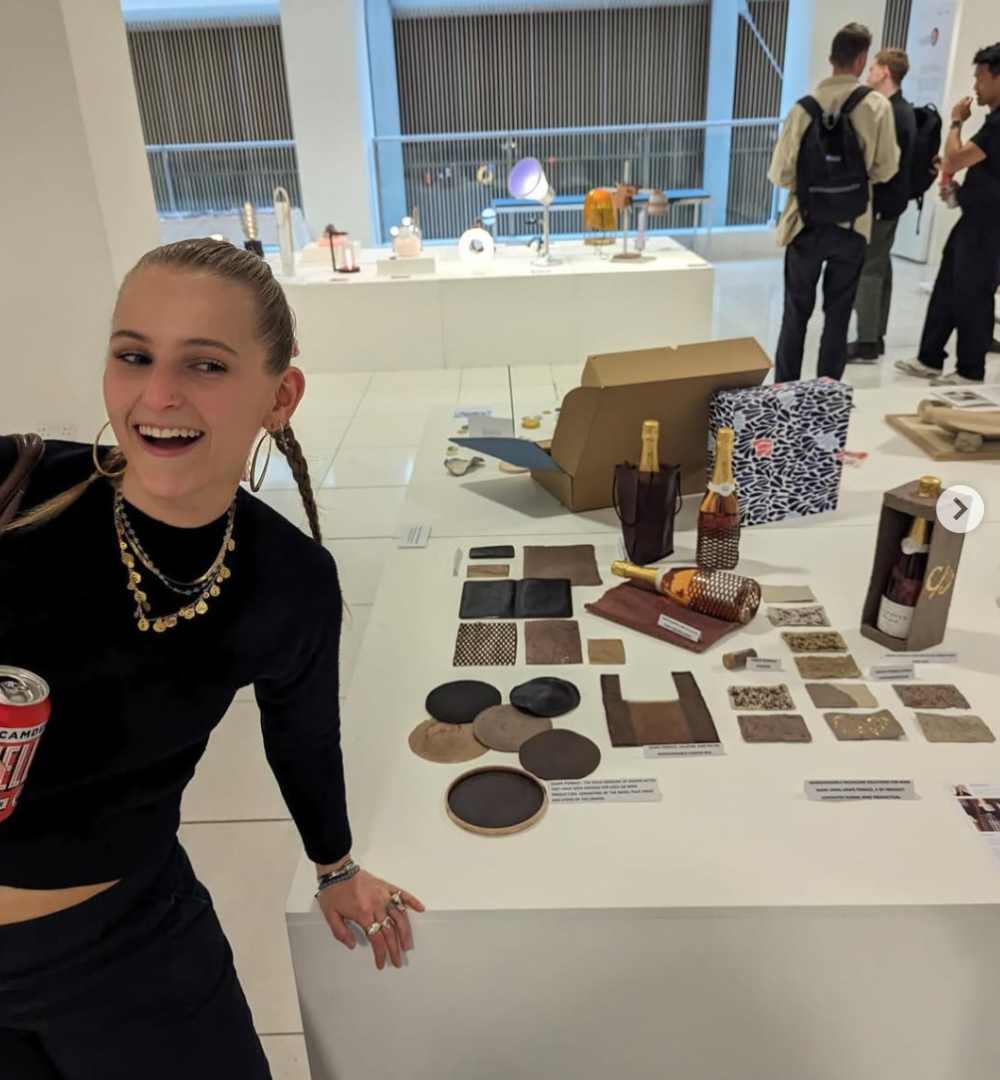
Ella Sainsbury
BA Product Design, Nottingham Trent University, 2024 Ella’s elegant biodegradable packaging materials for the wine industry are made from grape pomace, which is the waste from wine production, made up of stalks, skins, pips and so on. She has combined this with natural biopolymers, plasticisers, and binders. “Dad is a wine producer and told me about the vast quantities of grape waste generated when making wine – and so I was alerted to grape pomace and realised it could be a valuable resource.” Ella adds: “I am passionate about the use of local, natural, sustainable materials and I want to re-define what we see as waste. We should look to the past and explore traditional materials and techniques which were used before the invention of plastics. And then we can update them with modern technologies for a more circular economy.”
Eva Ellis
BA Furniture and Product Design, Nottingham Trent University, 2024 Cove is a streamlined multi-award winning chair which disrupts established furniture-making practice. It showcases a new sustainable way of “upholstery” by replacing conventional PU foam with a self-supporting high-tech 3D-knitted sleeve, developed in collaboration with Camira Knit. Manufactured directly from the knitting machine, the sleeve slides over a tubular metal frame, promoting a circular approach and eliminating waste. It is made from recycled polyester yarn with monofilament added in key areas for extra support. “Cove sets a new standard for sustainable upholstery,” says Eva. “It’s a responsible design that eliminates foam but does not compromise on comfort.” She adds: “I am committed to continuously exploring innovative practices to reduce my environmental impact.”


Eva Xiste
MA Design for Industry 5.0 , Central Saint Martins, UAL, 2024 GREEN GRAD Eva Xiste has invented Nover, a biomaterial made mainly from by-products: woodchips*, breadcrumbs* and wool* from three major waste streams of carpentry, food and farming. Nover has excellent material advantages, with good strength under compression. It is biodegradable, easy to make and has no synthetic binders. It repels water and has good acoustic properties.
Possible uses include insulation and other environmentally-friendly building products, and sustainable caskets and coffins. Callen, a town with 3,000 residents in Ireland, has already demonstrated the uses of Nover in Keogh’s Model Bakery for vessels, display stands, stools and vessels. Nover was created as part of the Til Now project, which focuses on eco-social, biodiversity collapse and spatial justice in Ireland. This initiative was part of a €5.8 million Creative Climate Action Fund. The aim was to develop solutions for climate change, biodiversity regeneration; and giving new economic and sustainable possibilities for Irish communities. Says Eva: “’m passionate about helping communities by using existing materials and resources to empower them. Using by-products with incredible properties rather than throwing them out is the way forward for a more sustainable future, and circularity of sourcing and manufacturing.”
* According to Eurostat waste statistics from 2020, the European Union generated a total of 48.28 Mt of wood waste. Eva Xiste, MA Design for Industry 5.0 , Central Saint Martins, UAL, 2024
* Over 900,000 tons of bread are wasted annually globally, which is about 24 million slices of bread every day.
* Up to 90% of sheep wool is burned or buried in countries across Europe, that’s around 200 000 tonnes every year. According to Eurostat waste statistics from 2020, the European Union.
Gabriel Kay
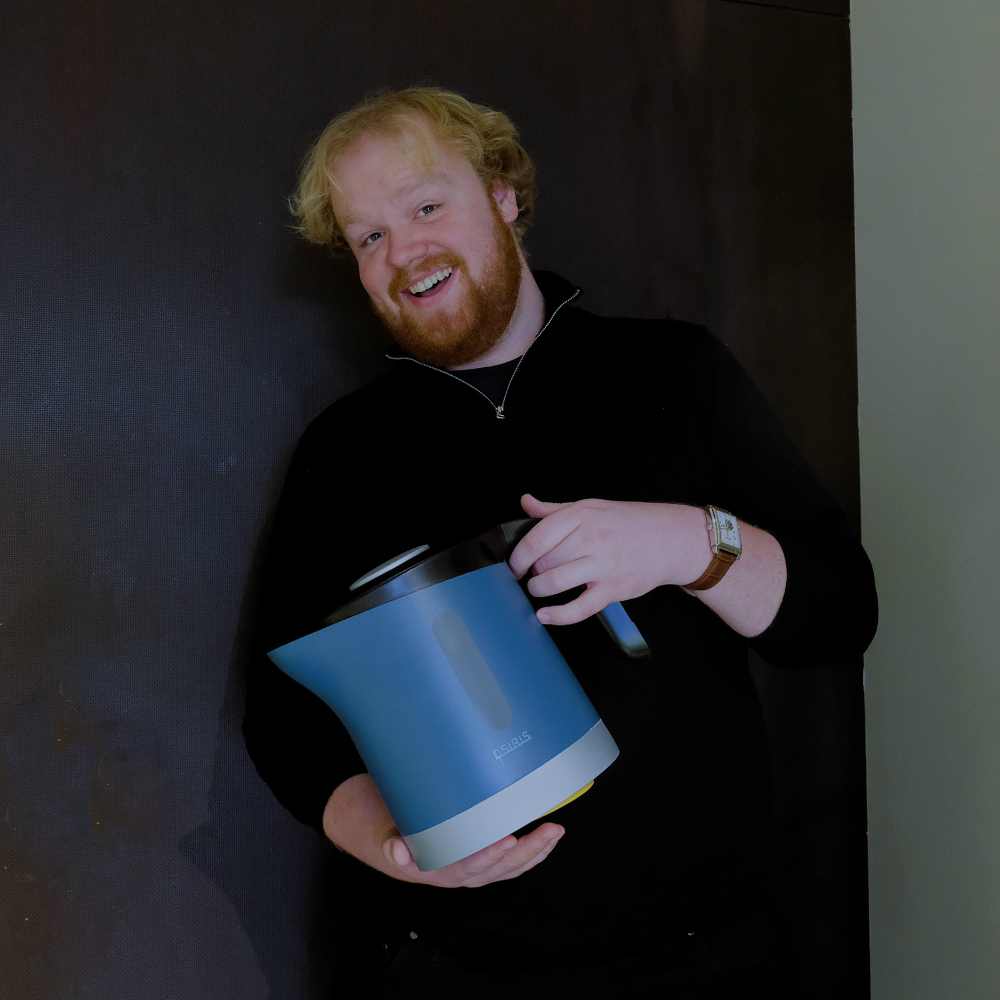
BA Product Design, De Montfort University, 2024. Small household goods like kettles, toasters and microwaves make up 32% (around 20 billion kilograms) of annual e-waste (electronic waste) disposal (UN Global E-waste Monitor, 2022). Enter Osiris, the repairable kettle. Users can replace its defective parts as necessary, extending the lifespan of the electronics. Thanks to a “modular” approach, with interchangeable components, only a screwdriver is needed. Says Gabriel: “E-Waste is a growing problem globally, and as designers, we are partly responsible for this crisis. I believe personally that our salvation is repair.” Initial inspiration came from companies like Dualit and SURI – “however I adopted the modular electronics pioneered by the likes of FairPhone.” And the name? Well, the Egyptian god Osiris is the god of rebirth reflecting the kettle’s design concept of repair and reuse. “And it’s a punchy six-letter word that would work well in marketing,” adds Gabriel.

Josephine Drew
BA Product Design, University of Edinburgh 2024. The Coop bowl is delicate, beautiful and compostable, crafted from the discarded eggshells of the University of Edinburgh’s catering services – mixed with sodium alginate and water, and made in Josephine’s University flat. “In a world of throw-away culture, Coop can make you reconsider what you consume and embrace a more mindful approach to waste management. And it reveals the beauty of repurposed resources.” Packaged in compostable materials, Coop comes with care instructions – and plantable seed paper. There’s a recipe for potato starch glue for repairing any damage and extending lifespan. The bowl has been painted on the inside with the designer’s own take on tempera, mixing egg yolk, water and kaolin clay. She would like to explore potential industrial uses for her eggshell material, such as packaging, homeware, and tiling.
Lewis Broughton
BSc Product Design, Bournemouth University 2024. Running shoes have a very short lifespan. The average runner buys between two and four pairs a year – and around 300 million pairs are thrown away annually in the UK alone. They cannot be recycled because they’re stuck together with glue. Lewis has designed ModuRun, the world’s first fully sustainable modular running shoe, a revolutionary design which breaks down into just four parts, held together by a unique “cage.” Thus shoes can be repaired, and/or restyled, and/or adapted for different terrains. And recycled and reused at end of life. “But my project is more than a shoe; it’s a step towards reducing waste, utilizing eco-friendly materials, and reshaping how we think about design. I strive to design with purpose, proving that sustainability and creativity can walk hand-in-hand.”


Louis Jacques Wright
BA Sustainable Product Design, Falmouth University, 2024. Louis has a passion for contemporary jewellery, but says it is as dominated by fast fashion as garments: “In 2022, a striking 74% of jewellery bought in the UK was costume jewellery, thrown away within a month or two.” There is also substantial greenwashing around materials and processes. Accordingly, his visionary collection Organic Opulence radically replaces the current linear, wasteful model with an ambitious fusion of nature, reality and concept, underpinned by advanced digital technology. Here “living jewellery” could be shaped by slime mould and designed, made and delivered through an app. Or maybe your “digital twin” in the metaverse could “wear” and share infinite iterations of your body adornments with no need for any physical depletion of resources. “Mainly, I wanted to disrupt the jewellery industry, to illustrate the beauty and potential of working with living organisms, and advocate for a more sustainable and ethical future in fashion. And, now in real time, I’m launching my own environmentally-friendly brand to show consumers the impact of their jewellery choices.”
Max Male
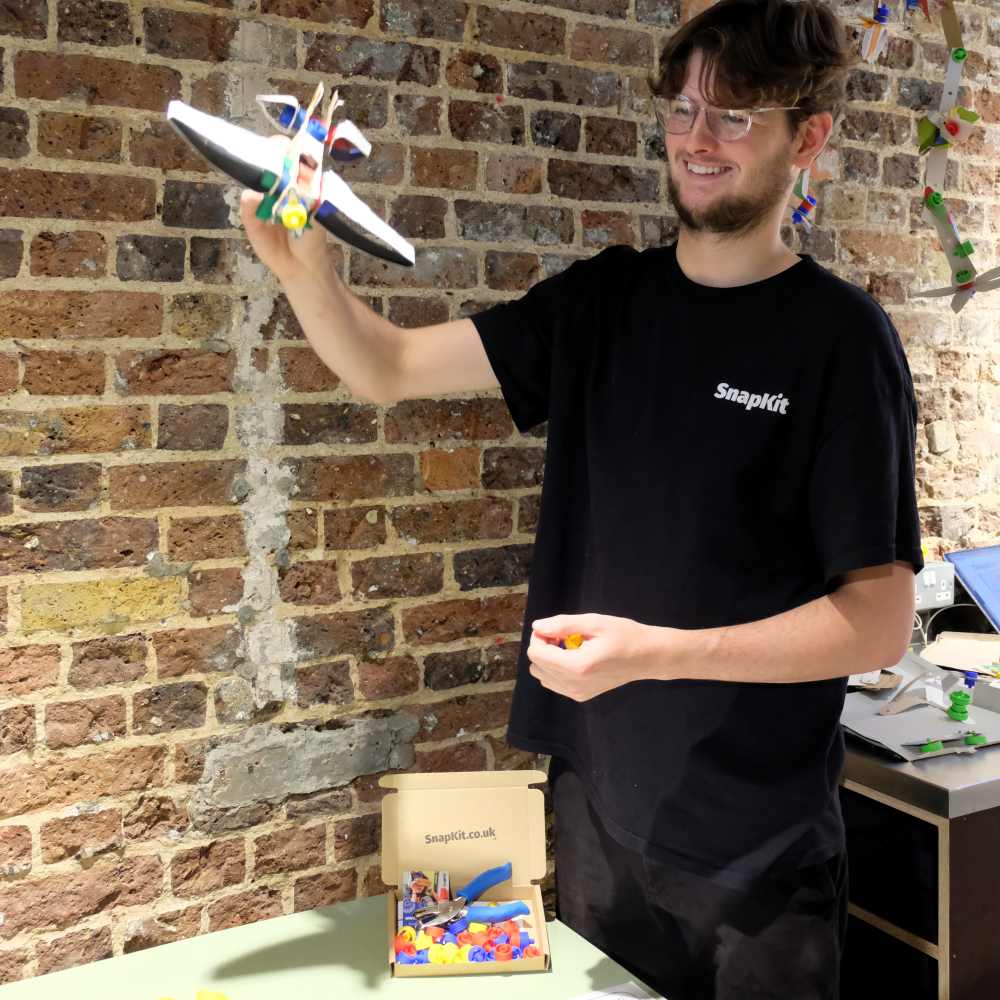
BSc Product Design with Professional Experience, University of Brighton, 2023. SnapKit is a multi-award-winning toy. Using only its clever design of connector and a hole punch, you can build all manner of structures, simple or ambitious, from waste paper and card. Connectors are made from 2g of recycled bio-plastic, optimised for 3D printing in batches locally. Says the designer: “Play shapes how we develop as people. Toys should reflect this and empower us with the skills and desire to build a better future, not reinforce harmful norms. SnapKit allows everyone to become an inventor, learn problem solving and absorb circular principles – crucially whilst having fun.”

Mengyan Guo
MA/MSc Innovation Design Engineering, Royal College of Art/Imperial College London; graduating 2025. TeaFab is a visionary dress made of “tea leather” from tea leaves mixed with gelatin and moulded into tea leaf shapes. Award-winning designer Mengyan is a tea enthusiast and performs Chinese tea ceremonies – “so I have a strong interest in the reuse of tea leaves.” She is experimenting with various teas, but this one is the very special Oriental Beauty oolong “bug bitten” tea which is uniquely aromatic because its leaves have been minutely bitten by a specific insect, the tea green leafhopper. Tea leather’s texture changes according to humidity so the dress will interact with its surroundings. And as an active carbon, tea garments can also absorb odours from the air. Rich in polyphenols, tea leaves have anti-oxidative properties, making tea leather garments more durable than other bio-cloths. However, tea leather can quickly grow mould in enclosed and damp spaces. Adds Mengyan: “I want to build a bridge between art and science using my interdisciplinary abilities.” The dress is work in progress…
Michael Dairo
BA Furniture & Product Design, London Metropolitan University, 2024. Cardboard as a material is often dismissed as simply a vessel for packaging and storage. “But it possesses an untapped potential that extends far beyond its conventional use,” asserts Michael. “It can be versatile, ostentatious and unique.” To prove his point, Michael has designed and made DEKONSTRUKT, a collection of sculptural pieces of cardboard furniture, drawing on the process of making fibreglass. “But I have used hessian as it is a natural plant fibre, together with craft resin which is VOC-free and non-toxic.” The shapes of the cardboard are formed either by hand or with industrial equipment such as ratchet straps – “to create tension and to mimic the look and feel of discarded boxes.”

Nikoleta Dimova
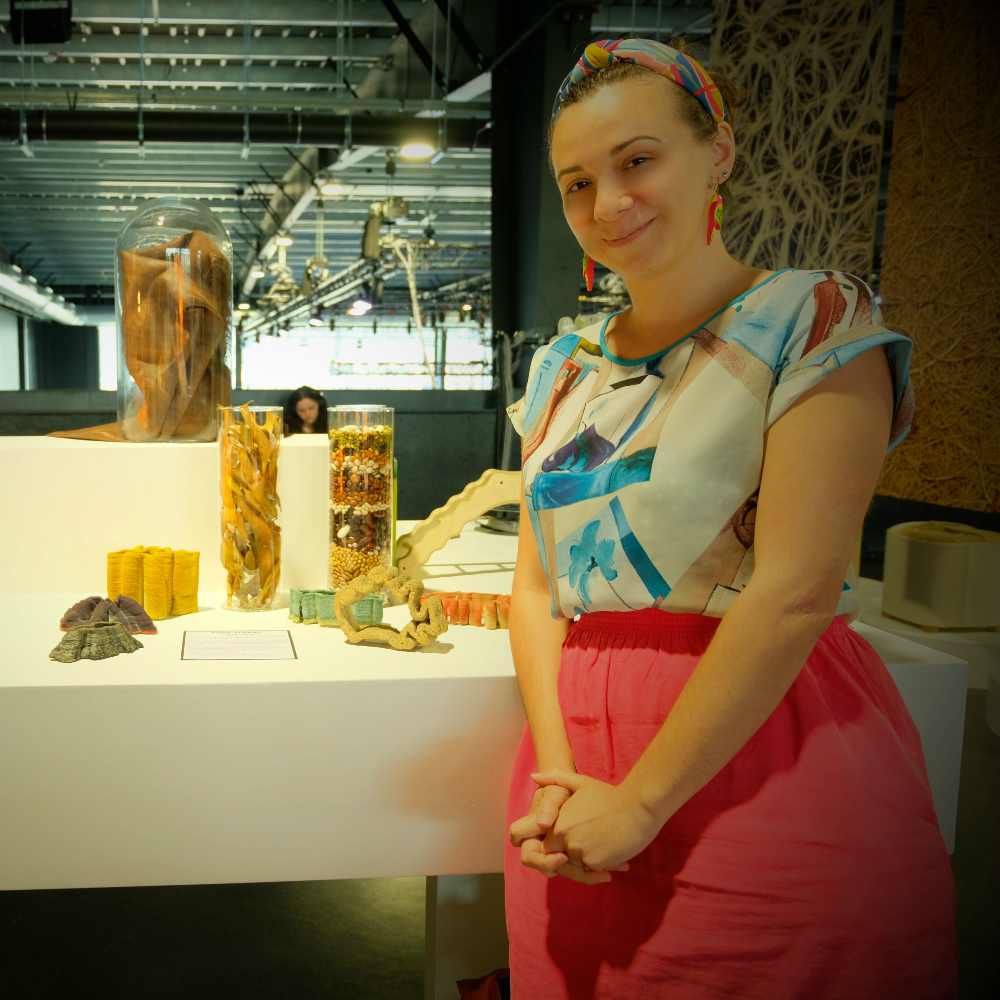
MA Biodesign, Central Saint Martins, UAL, 2024. Faba-Forma is a new biodegradable material, made from abundant bean-waste, can be extruded or 3D printed into imaginative, wall panels, vessels and more, whilst promoting circular, sustainable, local production and supporting growers. “As a society, we have lost our connection with food and where it comes from. Beans in particular, offer enormous benefits to both humans and nature, yet they sadly are often overlooked.” In addition to decorative uses, this material has potential for sound- and heat-insulation.
Reeti Roy
MA Textiles, Royal College of Art, 2024. Oscar’s Archive features a biodegradable non-toxic vegan material for leather-like fire-retardant textiles and for foam, using the bacterial cellulose waste from kombucha brewing (kombucha is a fizzy fermented drink typically made with green or black tea.) “For sustainable and ethical production, I repurpose waste materials and I do not use any non-renewable resources or animal derived products.” Reeti’s delightful printed, laser-cut and embroidered samples show the potential of her new material. And the name? Oscar was Reeti’s first dog “My vegan and biodegradable materials for the fashion industry are a stance against animal cruelty – and hopefully they can make people aware of what animals go though. Oscar is, so to speak, spreading the word through this Archive. It’s a link between animal suffering behind closed doors and the people who are ignorant of what’s happening…”


Rob Downward
BA 3D Designer Maker, Staffordshire University, 2024. Rob’s “natural” hemp furniture was inspired by long walks around a nature reserve. He experimented with multiple materials to find the right strength and texture – “I tried moss, barley, ground-up leaves and flax before arriving at hemp.” There were more investigations into binders – he looked at pine tar resin, gesso glue, plus hide and fish glue. But potato starch won the day – “it was quick to dry, retained the texture of the hemp and stayed strong enough to hold weight.” Sturdy, flexible cylinders made from hemp now support hardwood oak and ash tops from a timber merchant’s discards. Cylinders can be unzipped to pack flat; they can also zip together to make a room divider. Rob would like to explore other uses for his new material, perhaps in the medical industry, or for acoustic tiles.
Saima Fateh
MA Industrial Design, Central Saint Martins, UAL, 2024. The Transence Screen is a clever window blind – a new concept of “responsive sun-shading” which needs no electrical connections. The elegant translucent acrylic louvres contain a “smart” material called Nitinol, an alloy which changes shape as it gets hot, and reverts back as it cools down. Furthermore, the louvres are printed with photochromic patterns that shift from white to orange as solar radiation increases, creating pretty patterns on the wall – “but also flagging up invisible threats.” Research data came from Saima’s own home town of Udaipur, Rajasthan – “a semi-arid region with hot, dry summers, mild winters, and large temperature fluctuations between night and day.” Saima has a richly diverse design background – “my experience ranges from utilitarian products to craft-based sculptural installations.” Accordingly, she believes in “pluralist design” and adds: “Don’t think of me as either a designer or a craftsperson. To me design is simply ideas made visible.”


Sofia Lee
BA Product Design, London South Bank University, 2024. After many experiments and refinements, Sofia has created Garnele, a new biodegradable material from discarded crab and lobster shells, which decompose very slowly in landfill. “A significant amount of seafood waste is produced daily in busy cities such as London,” she reports, adding that “a single restaurant can generate more than 1,000 shells a day.” The shells are cleaned, dried, and ground into a powder, which is mixed with bio-resin or agar/gelatine and poured into moulds. (Bio-resin, derived from renewable sources, is biodegradable, versatile, strong and durable.) The material has been tested for mechanical properties such as tensile strength, water resistance, flexibility, and compressibility. It can be sawn and sanded. Sofia has also investigated different textures and formulae to enhance performance and versatility. Potential uses include tableware, lighting, tiles, packaging, disposable utensils and agricultural film.
Sophie Mockridge
BA Product & Furniture Design, Kingston School of Art, 2024. Single-use drink cans made from aluminium, along with plastic bottles, currently make up 45% of litter in the UK. What’s more, aluminium is infinitely recyclable, and the process generates 94% less carbon than extracting and processing the virgin metal. Sophie has designed COLLECT to draw attention to this resource in a playful and engaging way. Her construction is a little bit like a netball hoop. You chuck in a can at the top, and watch it progress through a curvy chute into a container. To create a circular economy, she says, our perspective must shift from “waste” to “material” and from “bin” to “collect’. “Thus COLLECT is a recycling system that provokes thought and inspires behavioural change.”


Tayo Ayelowo
MFA Fine Art, London Metropolitan University, 2024 Tayo’s exuberant large-scale textile compositions – “I AM THE EARTH” – vividly celebrate nature and animals and are intricately crafted from meticulously-cut scraps of discarded Dutch wax prints, with their bold distinctive graphics, of the type historically exported to West Africa, the artist’s homeland. “I can feel the history of these fabrics through my hands.” Etched pieces of scrap wood enhance the effect. “I advocate for nature through art. My work is my personal reaction to the effects of global warming. It evokes positive dialogues and suggests repurposing waste. The Earth deserves a chance to survive long after we are gone. I believe passionately in earth preservation and my art is my weapon for the needed change.”
Yihan Dong / Re-Block
MA/MSc Innovation Design Engineering Royal College of Art/Imperial College, London 2023 Using advanced AI and curing technology, Re-Block transforms construction and industrial waste (including red mud, fly ash, blast furnace slag, and recycled aggregates) into high-performance, concrete-like, eco-friendly materials that capture CO2 and reduce emissions by up to 90% compared to traditional methods. Design engineer Yihan’s team also includes Dr. Zhicheng Liu, materials scientist; Cheuk Laam Wong, interaction designer; Dian Lin, industrial designer; and Zhaodi Feng, AI expert. Designers and architects can experiment with this sustainable, waste-derived material using DIY kits. “We aim to reduce the environmental impact of design and construction by making sustainable materials widely accessible.” * There are 2 billion tons of industrial and construction waste globally every year and most of it is concrete. In the UK, it accounts for 35% of all waste. Traditional concrete production is responsible for one-third of CO2 emissions worldwide.

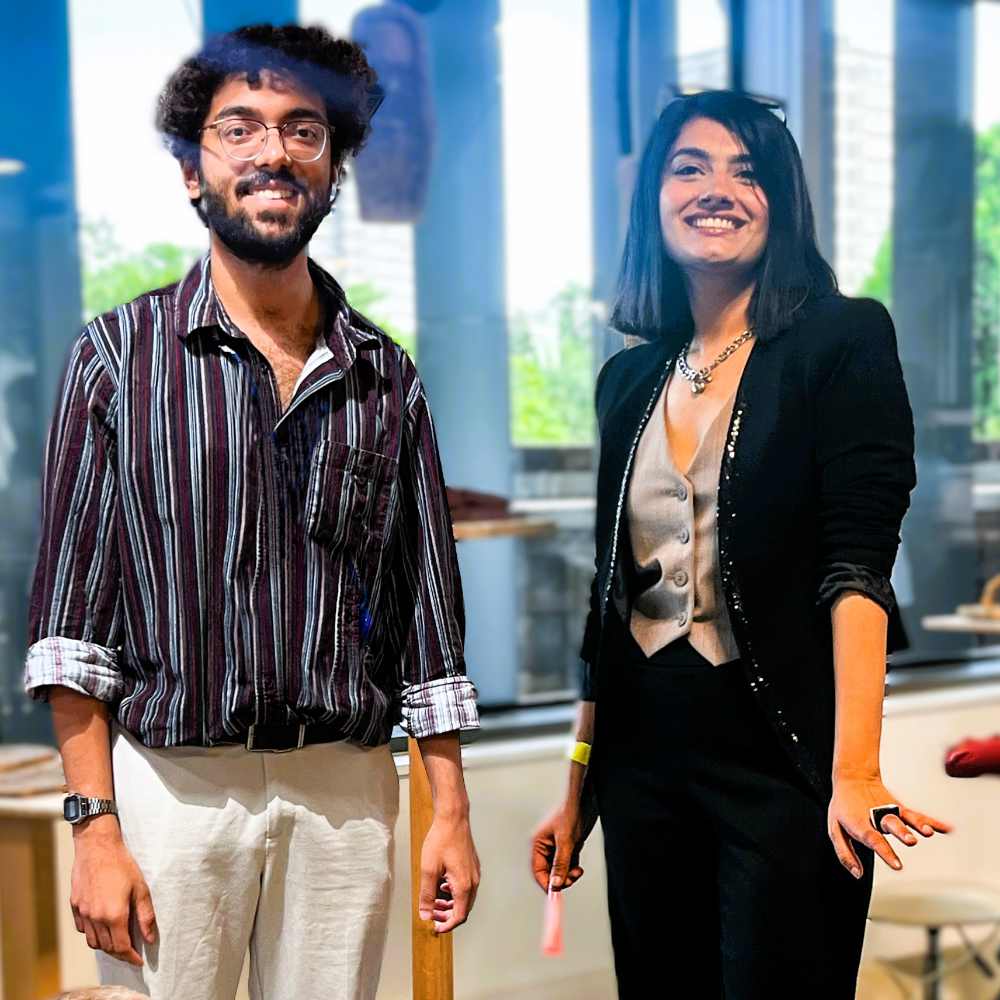
Yohaan Kukreja Ankita Khanna RAW
Materials (Renewable Agricultural Waste)
Yohaan and Ankita have perfected a bio-composite, a sustainable, circular alternative to synthetic materials, made from the rice straw otherwise burnt in huge quantities every year by farmers in India, where it causes deadly pollution. Their new material is strong and flexible and has many applications, including footwear, which the duo have already explored. They also plan single-use products for hotels and components for the automotive industry. “Growing up in the Punjab, we saw first hand the severe environmental and health results of rice straw burning. This annual practice, where around 21 million tons of rice straw is set ablaze, causes catastrophic air pollution and respiratory problems, plus soil degradation and economic loss. We propose agricultural waste as a resource, reshaped into biodegradable materials which address the crisis and create new opportunities for local communities.” Yohaan: MA/MSc Innovation Design Engineering, Royal College of Art/Imperial College London, 2024 Ankita: MA Design Products, Royal College of Art, 2024